
Tracing Patterns, Asking Questions
A Study of Immigration Waves in Fifth and Sixth Grade
In Research and Investigation, fifth and sixth graders are exploring the four major waves of immigration to the United States: Colonial/Early America, Mid-19th Century, Late 19th/Early 20th Century, and the Post-1965 Global Era.
Led by co-teachers Caroline Blackett, Cassie Pagnam, and Erik Pereya, the inquiry began with a shared presentation that introduced each wave through images, timelines, and discussion, inviting students to notice patterns, ask questions, and make personal connections—hallmarks of our Reggio-inspired approach to learning.
After learning about each wave, students reflected on which period most interested them and ranked their preferences. Based on these choices, they joined a wave to study more deeply. While students are working within small groups, the research and project work remain largely independent, allowing each child to follow their curiosity and construct meaning in their own way. As this project has just begun, excitement and questions are already driving the learning forward!
The Suitcase Project & Atelier Integration
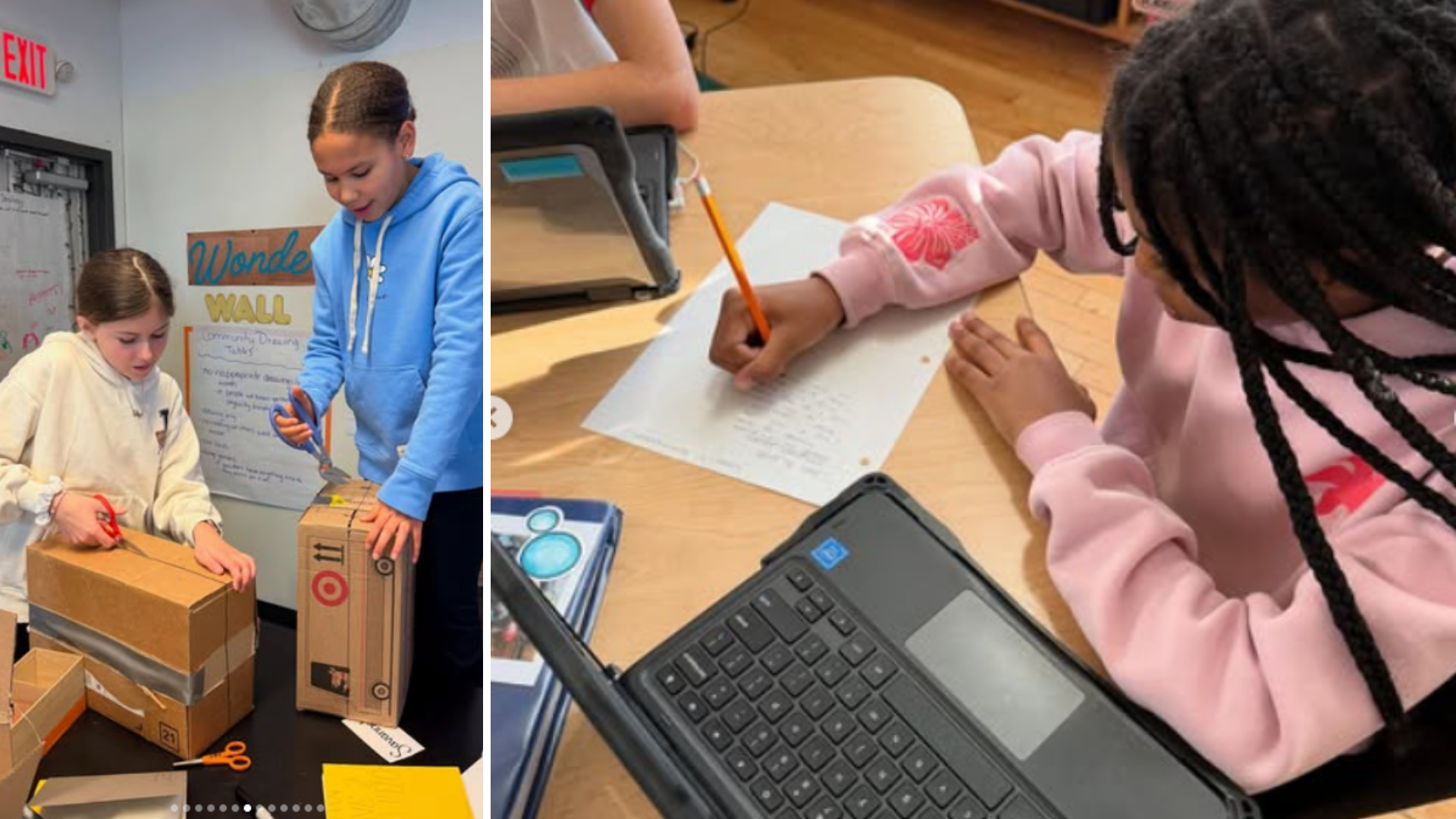
As a hands-on extension of their research, students are creating immigration “suitcases” during Atelier time with Upper School Atelierista Stephanie Foland. They may choose to imagine what they themselves would pack if immigrating during their chosen wave, or they may research a real person or family from that time period and represent what they might have carried with them. These suitcases are constructed from cardboard and designed during Atelier Integration, emphasizing process, creativity, and material exploration.
During Atelier time this week, students began designing and decorating their suitcases, treating them as symbolic artifacts that tell a story. This work encourages students to think deeply about identity, necessity, and the emotional experience of immigration. Each student will also create a presentation to share their learning with the class, teaching peers about their immigration wave through research, reflection, and visual storytelling.
Boston as an Extension of the Classroom
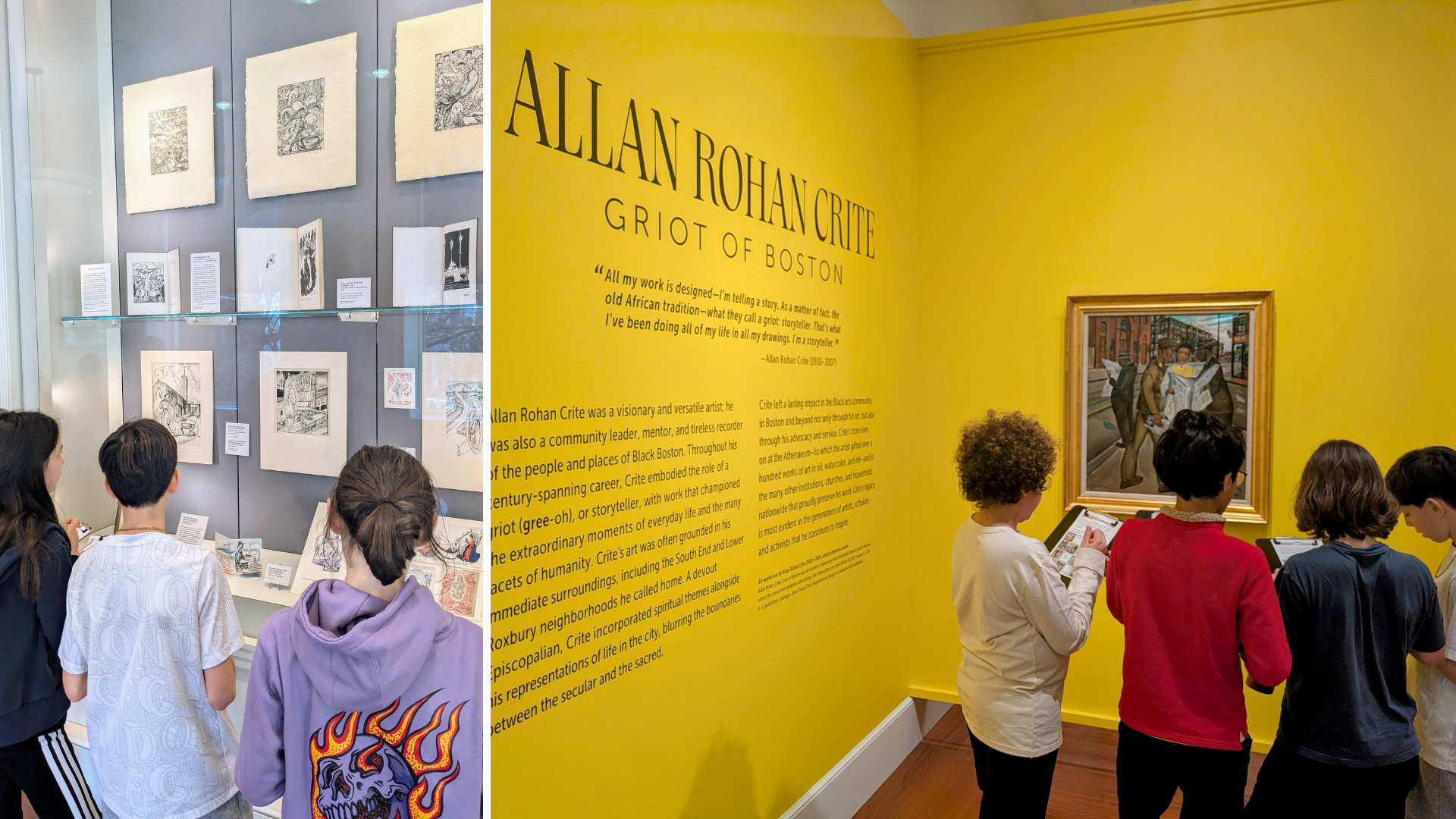
Extending their learning beyond the school walls, students visited the Boston Athenaeum, a space that functions as both a museum and a library. There, they studied the work of Allan Rohan Crite, a Boston-born artist (1910) known for his paintings depicting daily life in the Black community of Boston’s South End.
Crite’s work offered students a powerful visual lens into Boston during key periods of immigration and neighborhood change. Students learned that Crite was also deeply committed to accessibility in the arts, donating much of his work to local institutions so the public could engage with it. Adding a personal connection, students discovered that Crite was a mentor to a classmate’s grandfather, making the experience especially meaningful.
While at the Athenaeum, students were invited to engage playfully and observantly with the artwork using a “bingo board” that encouraged close looking and choice-driven exploration. Through this experience, students reflected on how neighborhoods evolve over time and how art can document community stories—further enriching their ongoing study of immigration through a Reggio-inspired lens of observation, connection, and reflection.