

At Advent, we believe that learning to read and write should be both joyful and empowering. Literacy is woven throughout the school day as students engage in both thematically integrated, inquiry-based projects and receive dedicated instruction in phonics, grammar, and comprehension. In this way, Advent cultivates a love of language and builds each child’s own identity as a reader and a writer.
Take a look at recent literacy moments from classrooms across the school!
ECC – Lively Letters
In ECC, children were introduced to two new Lively Letters that make airy sounds. J is the “noisy fast air” sound—students turn on their voices and give one quick push of air as they call out “J!” W is the “whooshing air” sound—children shape their mouths as if to whistle and “whoosh” their hands like small wheelchairs moving side to side.
To reinforce these sounds, teachers created a picture book featuring items beginning with j and w. Children named each picture and identified its beginning sound, strengthening letter recognition, phonemic awareness, vocabulary, collaboration, turn-taking, and attentive listening.
Kindergarten – Writing Studio
In Kindergarten’s Writing Studio, children were excited to begin creating their own nonfiction books. As their literacy skills grow, more students are naturally experimenting with adding words to their pages. Soon, teachers will introduce strategies for stretching out sounds and using inventive spelling to label their illustrations. For some children, this may mean writing a single letter to represent a whole sound, while others may begin hearing and recording multiple sounds or even spelling familiar words. This wide range is developmentally typical as children learn to express ideas in print, and we celebrate each child’s progress as they begin their author journeys.
First Grade – Phonics
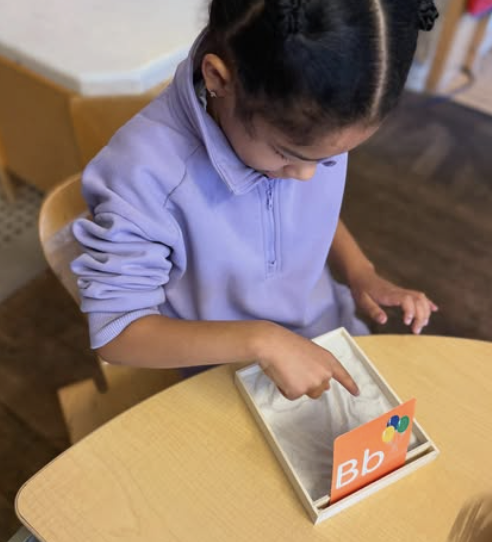
First Graders began exploring closed syllables and the “Double Trouble,” or “floss,” rule. A closed syllable contains a short vowel followed by a consonant, as in hat, dish, or shop. The Double Trouble rule teaches that in single-syllable words with a short vowel, the ending consonants ss, ff, and ll are doubled—such as in pass, off, or shell. Students practiced identifying phonemes and noticing how -ss, -ff, and -ll make one final sound. Teachers will revisit this after Winter Break to ensure students feel confident applying these rules in their reading and writing.
Second Grade – Reading & Writing: Water Inquiry
Second Graders have been reflecting on The Water Princess and learning about the water crisis in Flint, Michigan, through the story of young activist Mari Copeny (“Little Miss Flint”) in Rebel Girls: 100 Inspiring Young Changemakers. Their conversations about water scarcity and global access to clean water inspired them to create a collaborative, water-themed collage for the Advent community. This art piece highlights students’ writing, illustrations, and reflections on why clean water matters. Through this project, students are beginning to understand what advocacy can look like and how their voices and ideas can raise awareness about important issues.
Third Grade – Descriptive Writing
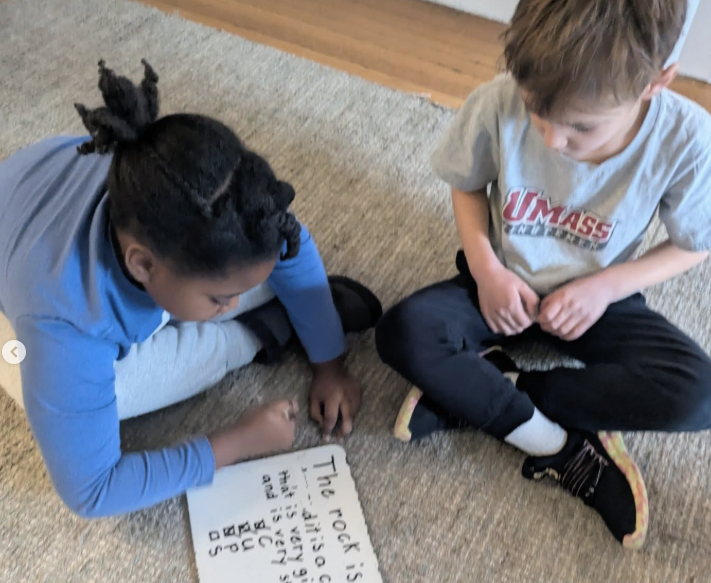
Third Graders have been exploring how sensory details help writers “show, not tell.” Using all five senses—plus a special “sixth sense” they brainstormed as a class—students practiced painting vivid pictures for their readers. They responded to three prompts: two about food and special meals, and one inspired by the Pixar short film Piper. Writers were challenged to name specific sensory details for each prompt. Students also began planning their personal narratives by mapping out the beginning, middle, and end of their stories. Using story planners helps them clarify their ideas, build excitement about writing, and feel less overwhelmed as they draft.
Fourth Grade – Reading
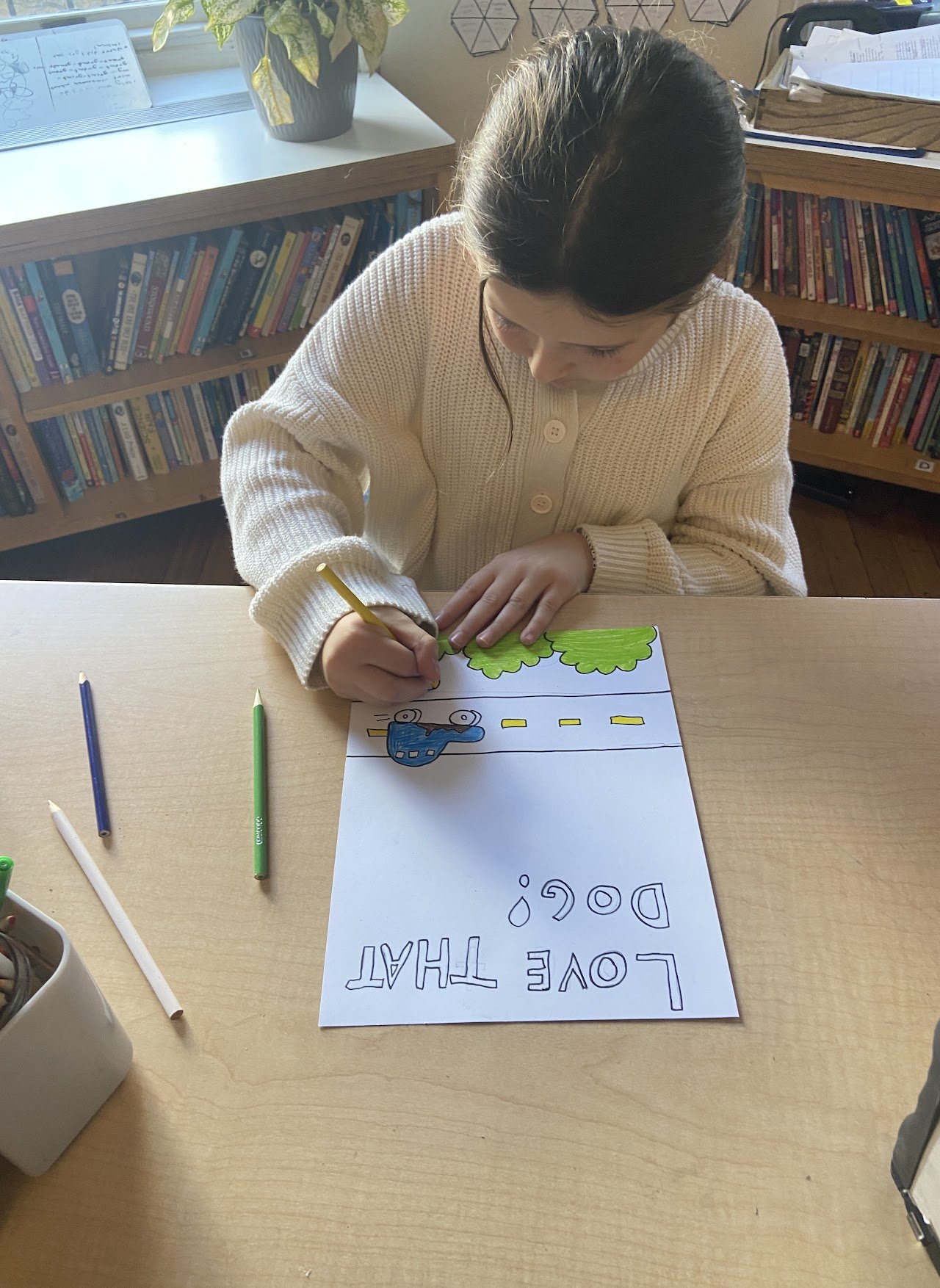
In Reading, Fourth Graders enjoyed working on book projects and free-choice literacy activities. Students could dedicate the full period to a Love That Dog project or rotate among activities such as Magnetic Poetry, Wordly Wise practice, IXL, and independent reading. This flexible structure allowed students to follow their interests while staying engaged in meaningful literacy work. Fourth Graders have also been drafting, editing, peer-reviewing, and refining their work as they prepare for our December 12 publishing party. Knowing they’ll share three selected paragraphs with guests has motivated students to revise thoughtfully and practice reading aloud with expression. Many are now focusing on pacing, tone, and emphasizing key moments in their writing. The energy and enthusiasm around publication are inspiring!
Fifth & Sixth Grade – Literacy
This week, Fifth and Sixth Graders kicked off one of their favorite projects: selecting books they believe could win the Newbery Medal. Students explored a curated list of 20 titles, ranking their choices and researching how the Newbery committee selects its winners. They answered questions about the history of the medal and the people who serve on the committee, gaining insight into how literary awards are decided. Students also began a new routine—“Word of the Day”—where they analyze a challenging vocabulary word and create original example sentences. It’s a fun, interactive way to build vocabulary and strengthen language skills.
